Spice Rack Medicine: What Turmeric, Ginger, and Black Pepper Were Doing Long Before They Seasoned Your Dinner
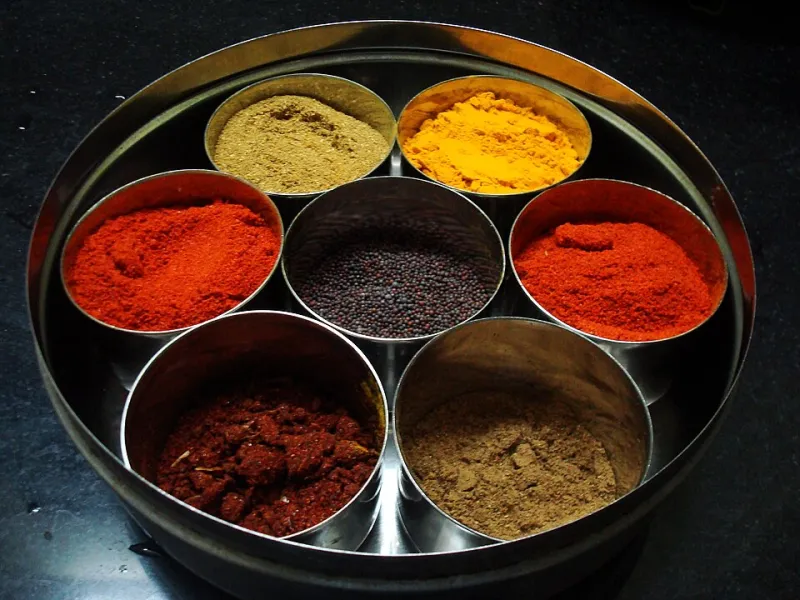
Photo: Dharmadhyaksha, CC BY-SA 3.0, via Wikimedia Commons
There's a decent chance you have all three of them sitting in your kitchen right now. Maybe the turmeric is a little crusty around the lid. Maybe the ginger is a sad, shriveled knob in the back of your crisper drawer. And the black pepper? Probably in a grinder you haven't thought twice about since you bought it.
But here's the thing — those three ingredients were, for most of human history, not seasoning. They were medicine. Serious medicine. The kind that Ayurvedic physicians in India, traditional Chinese healers, and Arab pharmacists reached for when someone came in with joint pain, a sluggish gut, or chronic inflammation. The spice trade wasn't just about flavor. It was about healing currency.
So what changed? Mostly, we just forgot. And then we started buying pills for the things these plants used to handle. Let's walk it back.
Turmeric: The Golden Root With a Bioavailability Problem Nobody Warned You About
Curcumin — the active compound in turmeric — has been studied in thousands of peer-reviewed papers at this point. The research covers everything from its anti-inflammatory effects to its potential role in supporting brain health and reducing oxidative stress. Traditional Ayurvedic medicine has been using turmeric for over 4,000 years for exactly these purposes: soothing inflamed joints, calming digestive upset, and supporting the liver.
But here's where most turmeric lattes and golden milk Instagram posts go quietly wrong: curcumin is notoriously hard for your body to absorb. Taken on its own, most of it passes right through you before your bloodstream ever gets a meaningful amount. This isn't a failure of the plant — it's a failure of how we've been taught to use it.
Traditional Indian cooking figured this out centuries ago without a single clinical trial. Turmeric was almost always cooked in fat and combined with black pepper. That wasn't a flavor accident. It was functional chemistry.
Enter Black Pepper: The Absorption Amplifier Your Turmeric Has Been Waiting For
Piperine, the compound that gives black pepper its sharp bite, is one of the more remarkable bioavailability enhancers in the natural world. When consumed alongside curcumin, it inhibits the liver enzymes that would otherwise break curcumin down too quickly — increasing its absorption by as much as 2,000 percent according to some studies. That's not a typo.
Beyond its role as turmeric's best friend, piperine has its own therapeutic history. Traditional healers in South and Southeast Asia used black pepper as a digestive stimulant, a remedy for respiratory congestion, and even a mild pain reliever. It was considered warming and activating — a spice that woke up the body's systems.
For everyday use, this means the ratio matters. You don't need a lot of black pepper to make a difference — even a small pinch alongside your turmeric is enough to dramatically shift how much curcumin your body actually uses. A fat source helps too: coconut oil, ghee, olive oil, even a fatty meal. This is why a turmeric supplement capsule you swallow with a glass of water on an empty stomach may be doing very little for you, while a proper curry eaten with a full meal might actually move the needle.
Ginger: The Spice That Does More Than Settle Your Stomach
Most Americans know ginger as the thing you reach for when you're nauseous — maybe a ginger ale when you had a stomach bug as a kid, or ginger chews on a bumpy flight. But traditional medicine systems across Asia, Africa, and the Caribbean used ginger as a full-spectrum remedy.
Ginger contains over 400 bioactive compounds, including gingerols and shogaols (the latter forms when ginger is dried or cooked). These compounds have demonstrated anti-inflammatory, antioxidant, and antimicrobial properties in clinical research. Traditional healers used ginger for joint pain and stiffness, cold and flu symptoms, poor circulation, menstrual cramps, and digestive sluggishness — basically the same conditions people are now buying over-the-counter products to manage.
What's interesting is that fresh ginger and dried ginger actually work a little differently. Fresh ginger is higher in gingerols and tends to be more effective for nausea and acute digestive issues. Dried ginger converts more of those gingerols into shogaols, which research suggests may be more potent for inflammation and pain. Traditional recipes often specified which form to use — a distinction that's been largely lost in modern cooking.
The Synergy Nobody Talks About: Using All Three Together
Here's where it gets genuinely interesting. These three spices weren't just used individually in traditional medicine — they were frequently combined, and that combination appears to be more effective than any single ingredient alone.
Ginger and turmeric together create overlapping anti-inflammatory effects through different biochemical pathways, meaning they may work on inflammation from multiple angles simultaneously. Black pepper enhances the absorption of both. When all three are consumed with fat and as part of a whole-food meal, the combined effect is something no single supplement capsule fully replicates.
This is the kind of wisdom that's embedded in traditional recipes — not as coincidence, but as accumulated clinical knowledge passed down through generations of observation. A classic Indian golden milk recipe, a Jamaican ginger tea with pepper, a Thai curry built on fresh ginger and turmeric paste — these weren't just cultural food traditions. They were delivery systems.
Real-World Ways to Actually Use These as Medicine
So how do you move beyond sprinkling turmeric into your smoothie and hoping for the best? A few practical approaches that honor both the traditional use and the modern science:
Golden paste is one of the most efficient ways to get therapeutic amounts of turmeric and pepper into your daily routine. Simmer turmeric powder with water until it forms a thick paste, stir in black pepper and a healthy fat like coconut oil, and store it in the fridge. Add a teaspoon to warm milk, oatmeal, soups, or stir-fries throughout the week.
Fresh ginger tea — actual ginger root simmered in water for 10 to 15 minutes, not a tea bag — delivers a meaningfully higher concentration of active compounds than most commercial ginger products. Add a squeeze of lemon and a small amount of raw honey if you want to make it more palatable.
Cooking intentionally rather than supplementing arbitrarily. A curry made with fresh turmeric, ginger, and plenty of black pepper cooked in ghee or coconut oil is, in many ways, a more bioavailable delivery mechanism than a supplement taken with water. Food matrix matters.
If you're dealing with a specific issue — chronic joint stiffness, recurring digestive trouble, persistent low-grade inflammation — it's worth being consistent over weeks rather than expecting a single dose to do much. Traditional medicine used these remedies daily, as part of a broader dietary pattern, not as occasional interventions.
A Note on Dosing and Sensibility
None of this is a reason to throw out your prescriptions or skip a doctor's visit for something serious. But it is a reason to look at your spice rack a little differently. These aren't just flavor agents that happen to have some health buzz around them. They're bioactive plants with real compounds that your body responds to — the same ones humans have been relying on for millennia.
The modern world handed us the convenience of pharmaceutical shortcuts. What it didn't always hand us was the context for what we were giving up. Getting that context back — understanding why your great-grandmother's kitchen smelled like ginger and pepper, why turmeric stained everything it touched in traditional households — is part of reclaiming a more intentional relationship with what you put in your body.
Your spice rack has been waiting. It's time to use it like it means something.