Why Brewing Herbal Tea Is the Mindfulness Practice Your Brain Has Been Waiting For
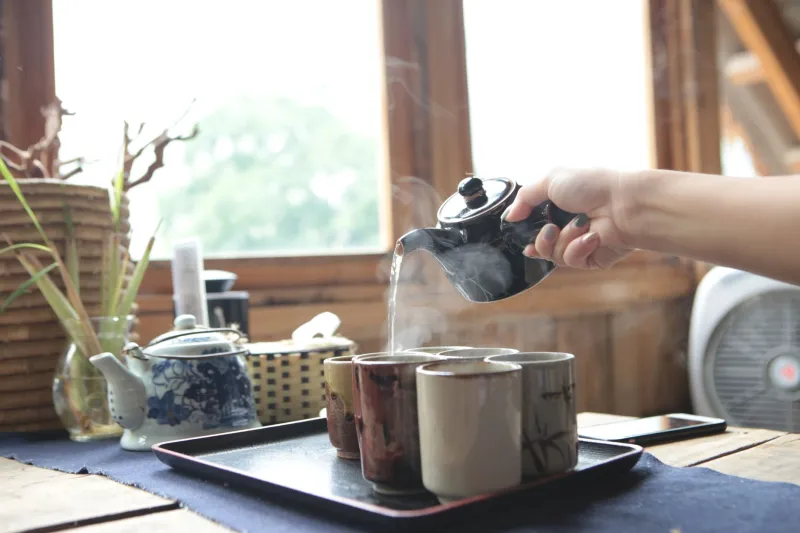
Somewhere between your third Slack notification and your second reheated cup of coffee, you probably stopped tasting anything at all. That's not a judgment — it's just modern life. We consume beverages the way we consume everything else: fast, distracted, and already thinking about the next thing.
But here's what's interesting. Across wildly different cultures — Japanese, Moroccan, Andean, Chinese, British — one practice has remained stubbornly consistent for thousands of years: people slow down to make tea. Not just drink it. Make it. And that distinction, it turns out, matters enormously for your brain.
The Ritual Is the Medicine
Most Americans who've discovered herbal teas focus on what's in them — the chamomile for sleep, the ashwagandha for stress, the ginger for digestion. And those biochemical benefits are real. But researchers studying mindfulness and habit formation are increasingly pointing to something the plants can't take credit for: the ritual itself.
When you engage in a slow, sensory-rich, repeated sequence of actions — boiling water, measuring loose leaf herbs, watching the color bloom into the cup, wrapping your hands around warm ceramic — your brain does something specific. It shifts from the high-alert default mode network (the part that's basically running your worry reel on loop) into a more focused, present-tense state that neuroscientists associate with reduced cortisol and improved mood regulation.
This isn't just cozy speculation. A 2021 study published in Frontiers in Psychology found that ritualistic behaviors before consuming food or drink actually enhanced the perceived value and sensory experience of what was consumed — and, critically, reduced anxiety scores in participants. The ritual primed the nervous system to receive.
That's not so different from what a Zen tea master would tell you, honestly.
What Traditional Tea Cultures Understood About the Nervous System
Japanese chado — the Way of Tea — isn't just an aesthetic tradition. It's a full-body practice designed to anchor attention in the present moment. Every movement in a formal tea ceremony is deliberate: the angle of the wrist, the sound of water, the silence between gestures. Practitioners describe it as more grounding than seated meditation, precisely because the hands are engaged.
In Morocco, the preparation of mint tea is a social and ceremonial act. The tea is poured from a height to create froth, served three times with increasing sweetness, and shared in conversation that is never rushed. The whole process takes twenty minutes minimum. It's not inefficiency — it's architecture for human connection and nervous system regulation built right into the culture.
Andean communities have long used herbal infusions like muña and coca leaf tea not just for their altitude-adaptation properties, but as morning anchors — a signal to the body that the day is beginning with intention rather than emergency.
What these traditions share isn't a particular herb. It's time. Presence. Sensory engagement. And repetition — which, from a neuroscience standpoint, is how new neural pathways get carved.
Why Your Brain Loves a Slow Ritual More Than a 10-Minute App Session
Here's the thing about most meditation apps: they ask you to stop doing everything and just be. For a lot of Americans, that's genuinely hard. The moment you sit still with no task, the mental noise often gets louder before it gets quieter. Plenty of people quit guided meditation because the gap between "relax" and actually relaxing feels impossible to cross.
Herbal tea rituals offer a different on-ramp. They give your hands something to do. They engage multiple senses simultaneously — smell, touch, sight, sound, taste. And that multisensory engagement is actually a faster route to nervous system downregulation than pure stillness for many people.
Neuroscientist Dr. Andrew Huberman has discussed at length how deliberate, slow breathing (which naturally accompanies the act of sipping hot liquid) activates the parasympathetic nervous system — your rest-and-digest mode. Combine that with the grounding effect of holding something warm, the olfactory stimulation of aromatic herbs, and a practiced sequence of actions, and you've built a pretty sophisticated stress-response intervention out of a kettle and some dried plants.
Building Your Own Tea Ritual (No Ceremony Required)
You don't need to invest in a Japanese tea set or study for years to get the benefits. The key elements are simplicity and repetition — doing roughly the same thing, in roughly the same way, at roughly the same time each day.
A few ideas to get started:
Choose your moment intentionally. Morning before screens, mid-afternoon instead of a third coffee, or as an evening wind-down signal. Pick one slot and protect it.
Use loose leaf herbs when you can. The act of measuring, smelling, and watching the herbs steep slows you down in a way a tea bag doesn't. Try tulsi for stress, lemon balm for anxiety, or passionflower for evening calm.
Leave your phone in another room. This is non-negotiable if you want the ritual to work neurologically. Divided attention breaks the spell.
Use a vessel you actually like. This sounds trivial, but the tactile and visual pleasure of a mug or cup you find beautiful genuinely contributes to the sensory richness of the experience.
Sit down. Even for five minutes. The posture shift from standing-and-multitasking to seated-and-present signals your nervous system that something different is happening.
The Underrated Power of Doing One Thing
There's a phrase that floats around wellness circles: single-tasking. It's the radical act of doing one thing at a time, completely. In a culture that celebrates busyness and productivity stacking, it's quietly countercultural.
Herbal tea rituals are one of the most accessible single-tasking practices available — and they come with a built-in timer. You can't rush a proper steep. You can't skip the cooling. The tea itself imposes a pace, and your brain, given permission to slow down, often exhales in ways it hasn't in hours.
Traditional cultures didn't have neuroscience to explain why their tea rituals worked. They just noticed that people who observed them were calmer, more connected, and clearer-headed. Turns out, they were right — they just didn't have the vocabulary for parasympathetic activation and default mode network suppression yet.
You don't need the vocabulary either. You just need the kettle, the herbs, and ten minutes that belong entirely to you.
Nature's been offering this particular kind of medicine for centuries. It's still available. And unlike most things that are good for you, it also happens to taste wonderful.